Costco Korea Sushi Combo Review: Is It Better Than Local Japanese Restaurants?
If you are an expat or a traveler staying in South Korea, you quickly realize one thing: eating out can get expensive, especially if you crave fresh sushi. While Korea has an incredible culinary scene, sitting down at a local Japanese restaurant (Il-sik-jib, 일식집) or a trendy conveyor-belt sushi bar can easily drain your wallet, leaving you with small portions that don’t quite fill you up.
Enter the deli section at Costco Korea.
Piled high in the refrigerated open-air display cases is the famous Costco Sushi Combo (코스트코 초밥 세트). It is massive, visually stunning, and unbelievably cheap. But does a wholesale club chain really stand a chance against local Japanese chefs who specialize in raw fish? Let’s dive into the ultimate review of Costco Korea’s sushi to see if it’s truly worth your money.
🍣 What Do You Get in the Costco Korea Sushi Combo?
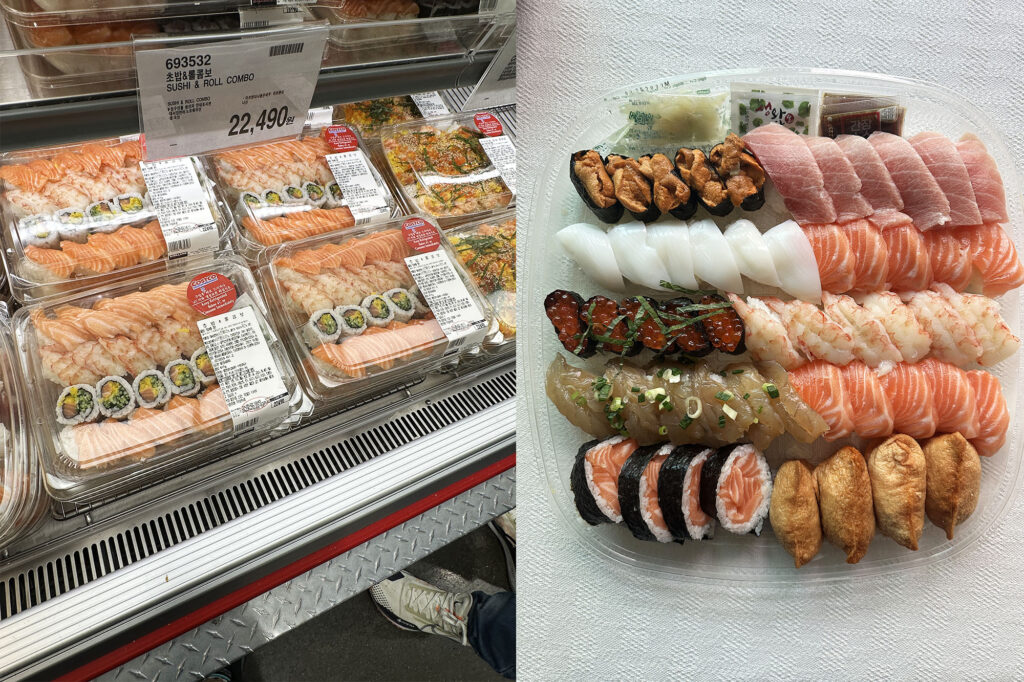
Costco Korea offers a few variations of their sushi trays depending on the day and season, but their most popular year-round staple is the 24-piece to 32-piece assorted combo.
Unlike Western Costco branches that often heavily lean on imitation crab rolls or avocado rolls, Costco Korea treats its sushi like a premium local fish market. A standard combo platter typically includes:
- Thick-Cut Salmon (연어): Fatty, melt-in-your-mouth Norwegian salmon that is famously high-quality.
- Korean Flatfish / Halibut (광어): A local favorite in Korea, known for its clean, mild flavor and chewy texture.
- Shrimp (새우): Both cooked sweet shrimp and raw red shrimp (Ganjang-gaewoo style or sweet raw shrimp).
- Premium Additions: Depending on the tray size, you might also find scallops, unagi (eel), or octopus.
Every tray comes fully packed with plenty of local soy sauce packets, pickled ginger (Gari), and extra wasabi.
💰 The Price vs. Value Breakdown: Costco vs. Local Restaurants
Let’s talk numbers, because this is where Costco offers significantly better value for larger portions.
At a standard local Japanese restaurant or sushi spot in Seoul, a decent 10-piece to 12-piece individual sushi set will easily cost you between 18,000 KRW to 30,000 KRW ($13 to $22 USD). If you are ordering premium fish like salmon or halibut, the price climbs even higher.
At Costco Korea, a massive 24-piece premium assorted tray generally costs between 24,000 KRW to 32,000 KRW ($18 to $24 USD).
Mathematically, you are getting double the amount of sushi for the exact same price, and the slices of fish (the Neta) are notoriously thicker than what you receive at budget conveyor-belt restaurants.
⚖️ The Honest Review: Taste, Quality, and Texture
The Good: Freshness and Fish Thickness
Because Costco Korea moves an insane volume of inventory every single day, the fish never sits on the shelf for long. The salmon is incredibly rich and fatty, easily matching the quality of mid-tier sushi restaurants. The local Korean flatfish (Gwang-eo) is kept incredibly fresh, offering that perfectly firm, clean snap that locals love.
The Catch: The Rice Factor
As an honest blogger, I have to give you the realistic downside. Because Costco sushi is mass-produced and kept in a cold display case, the sushi rice (the Shari) can be slightly firm and cold. It lacks the delicate, room-temperature fluffiness of sushi hand-rolled by a chef at a proper counter.
However, if you let the tray sit on your counter for about 15 to 20 minutes before eating to let it come up to room temperature, the rice softens up beautifully!
🏋️♂️ Choi’s Pro-Tips for Expat Fitness & Meal Prep
If you are a fitness enthusiast or digital nomad living in Korea trying to maintain a clean, high-protein diet, this sushi tray is your ultimate survival weapon.
- The Ultimate High-Protein Grab-and-Go: One large tray packs a massive amount of lean protein from the thick cuts of fish. It requires zero cooking, zero prep, and you can eat it straight out of the box in the Costco food court or at your apartment kitchen.
- The Best Time to Buy: If you want the absolute freshest rice and fish texture, try to shop at Costco right when they open in the morning or during mid-afternoon weekdays when the kitchen staff are actively restocking the deli cases.
Head-to-Head: Costco Korea vs. Local Sushi Restaurant
| Metric | Costco Korea Sushi Combo | Local Japanese Restaurant |
| Price per Piece | ⭐⭐⭐⭐⭐ (Unbeatable Economy) | ⭐⭐ (Much More Expensive) |
| Fish Freshness | ⭐⭐⭐⭐ (Very High Turnover) | ⭐⭐⭐⭐ (Freshly Sliced) |
| Rice Texture | ⭐⭐⭐ (Cold / Dense) | ⭐⭐⭐⭐⭐ (Warm & Perfectly Seasoned) |
| Convenience | ⭐⭐⭐⭐⭐ (Ready to Eat Instantly) | ⭐⭐⭐ (Requires Waiting / Dining In) |
Final Verdict: Is It Better?
Is Costco Korea’s sushi combo better than a fancy, high-end mid-range sushi restaurants or a traditional Japanese restaurant? No, because it cannot replace the artisan touch of a sushi chef.
But is it better for your lifestyle, wallet, and hunger? 100% Yes. For expats looking for massive value, excellent salmon quality, and a hassle-free, high-protein meal, the Costco Sushi Combo is the undefeated champion of South Korea.
💬 What do you think?
Have you tried the sushi at Costco Korea yet? Do you think the rice is too cold, or does the massive savings make up for it?
For more authentic reviews on Korean supermarket values, hidden Costco deals, and expat lifestyle hacks, make sure to bookmark choitip.com!